
Home Baking Cookies Spread Too Much
baking 12 min fix
Cookies Spread Too Much
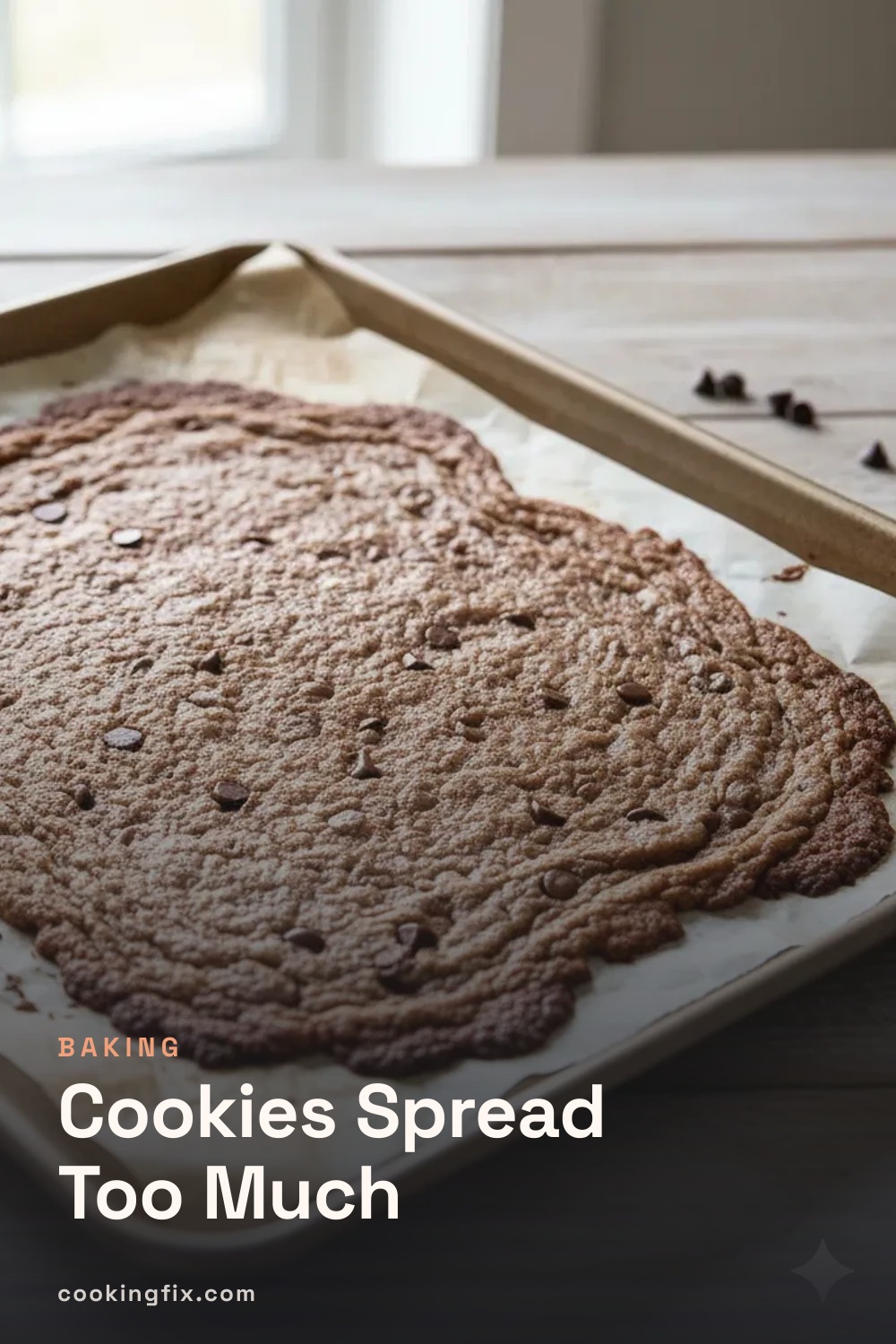
Your cookies melted into flat, thin discs because the butter was too warm, there was too much sugar relative to flour, or the dough was not chilled. These fixes rescue the current batch and prevent it next time.
cookies spread into thin flat discs · cookies merge together on the baking sheet · vegetarian
The fix
Tap a step to check it off.
- 1 scoop remaining dough into balls and refrigerate for at least 30 minutes before baking the next batch
- 2 mix 1-2 tablespoons flour into the remaining dough to absorb excess moisture
- 3 use a cool baking sheet (not one still hot from the last batch) lined with parchment paper
If it's still wrong
- Crumble the thin cookies and use as a crust for cheesecake or ice cream pie.
- Stack two thin cookies with frosting, Nutella, or ice cream between them for sandwich cookies.
Prevent next time
- Use cold butter (straight from the fridge) and chill the formed dough balls for 30-60 minutes before baking.
- Measure flour by spooning into the cup and leveling off, or better yet, weigh it (120g per cup).
- Reduce sugar by 1-2 tablespoons per batch if your cookies consistently spread; sugar liquefies in the oven and promotes flow.
Notes
Why this works
Cookie dough is a race between melting and setting. Butter melts around 90-95F, creating liquid that lets the dough flow. Meanwhile, egg proteins coagulate around 160F and starch absorbs water and gels around 180F, which stops the spread. If butter is already soft at room temperature, it melts almost immediately in a 350F oven, and the dough has nothing holding it in shape until the eggs set minutes later. Chilling the dough means the butter starts at 38F instead of 70F, buying an extra few minutes of structure. Flour additions raise the proportion of starch, which absorbs liquid butter and creates a thicker dough that resists flow. A hot baking sheet from a previous batch starts melting the bottom of the dough before the oven even begins setting the top, so always use a cool sheet.